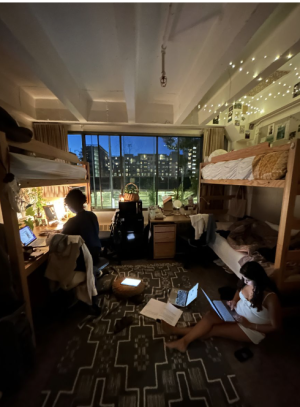
10:45 pm on a Thursday. You just arrived back at your dorm after not such a good night of partying with friends. You’re tired, agitated, and trying to pull yourself together by doing your six-step skin care routine. Lying in your bed, you can’t help but let the feelings of rejection fill your body while trying to maintain the mentality that you taught yourself of worth and independence. However, all this suddenly washes away as the staple Snapchat ring goes off, causing you to lurch out of bed to grab your phone. The bright phone light hits you with a notification that Mr. Random, You Talked to for Twenty Minutes at the Party a Week Ago, just snapped you. Suddenly, life doesn’t feel so bad anymore, and you feel a sense of achievement. How is Snapchat capable of changing our mood in the snap of a moment? And why have we let it?
Snapchat entered our generation a few years ago and has revolutionized digital connection, particularly in the dating world. It’s used in a way to validate today’s normalization of hook-up culture: the disconnected communication. Snapchat is generally used for casual hookups and dating; however, there is nothing casual about the app at all! Snapchat has aspects that create an environment of obsession for its users. It’s different from iMessages, where its form of communication is through disappearing words and photos, also known as ‘snaps.’ Using Snapchat has actually made talking to someone more complicated, considering that people can actually be stalked. This takes stalking your ex or situationship to an entirely new level, where you have access to their location and the infamous counting of the Snapscore. This isn’t to call anyone out or pass judgment; we’ve all been there where we are staring at the little red triangle labeled DELIVERED as we contemplate our life, praying they snap back. The app even takes ghosting to an entire new level, where you can physically leave someone on OPEN. OPEN, meaning they are actively showing you they aren’t going to respond, that they don’t want to. It’s harsh, but it’s a term in this cruel, strange hookup scene that we have looked at as ‘normal.’ However, is a relationship defined by whether or not a boy will send us a half-face photo before the timer runs out normal?
Why do we allow our worth to be dictated by the amount of effort put into a photo someone sends you? The rules we have created just add to the messed-up world we have subjected ourselves to. The logic that if you get sent a picture of a ceiling versus the wall photo or maybe things are getting really serious if they send a full face! This system is anything but casual, but it’s used for what we’re calling casual relationships: the situationship. It has replaced the ancient phone number that used to be our main form of communication. To ask for a phone number in today’s world is almost the same as asking for their hand in marriage. A couple of numbers have represented a level of a relationship people today fear. Today’s dating culture is the main reason for all of this. The emphasis on casualness that we project onto dating creates an anti-chivalrous environment, and we have lost the romance in all of this. The truth is, young people today are often embarrassed by their emotions and vulnerability; that’s why we hide behind screens and are subjected to the situationship lifestyle. People say that relationships are shameful or degrading, but they say that because they have to protect themselves from the idea that they may end up hurt. Snapchat is a tool that protects people from tapping into any kind of deep feeling, so we hide in the filters and surrender to the culture. The fake, casual app that Snapchat appears to be is far from what it truly is: repression and denial.